How I Build Character Consistency for AI Films: Mia Wald
Mia Wald began as a custom-trained Soul ID character built from multiple photographs. This is how I direct that reusable identity across framing, lighting, emotion, and motion.
Mia Wald’s development brings together character research, a reusable identity created with Higgsfield’s Soul ID, and cinematic direction. In this article, I share how I approach AI character consistency across framing, lighting, styling, and motion—and how her personality and voice help connect those images into a recognizable presence.
How I Build Character Consistency for AI Films: Mia Wald
Creating one convincing image of a character is relatively easy. Building a character who remains recognizable across close-ups, wide shots, changing expressions, different lighting conditions, and moving sequences is a different challenge entirely.
That distinction matters in filmmaking. A character is not a single face or a polished portrait. She has to survive the grammar of a sequence. The audience needs to recognize her when she turns away from camera, moves through a dark room, runs across a landscape, or appears for only a few seconds in an extreme close-up.
This is the problem I have been exploring through Mia Wald, an original AI-generated character I created for cinematic storytelling. Mia first appeared in my independent short film A Dream of a Dream, but her development extends beyond one project. She is a recurring presence through which I can explore dreams, perception, and inner experience.
The goal is not to freeze her into one perfect image. It is to make her feel like the same person while allowing her to respond naturally to each scene.
In Mia’s case, that process does not begin by attaching a character sheet to every prompt or repeatedly describing her face from scratch. I created her inside Higgsfield using Soul ID Character, training a reusable custom character identity from a varied set of photographs of myself. Once that identity was created and saved in the platform, I could select Mia as the character for new generations and focus the prompt on the scene around her.
That trained identity provides the foundation. My work then begins with everything required to turn that recognizable person into a character who can perform inside a film.
Mia began as a trained character identity
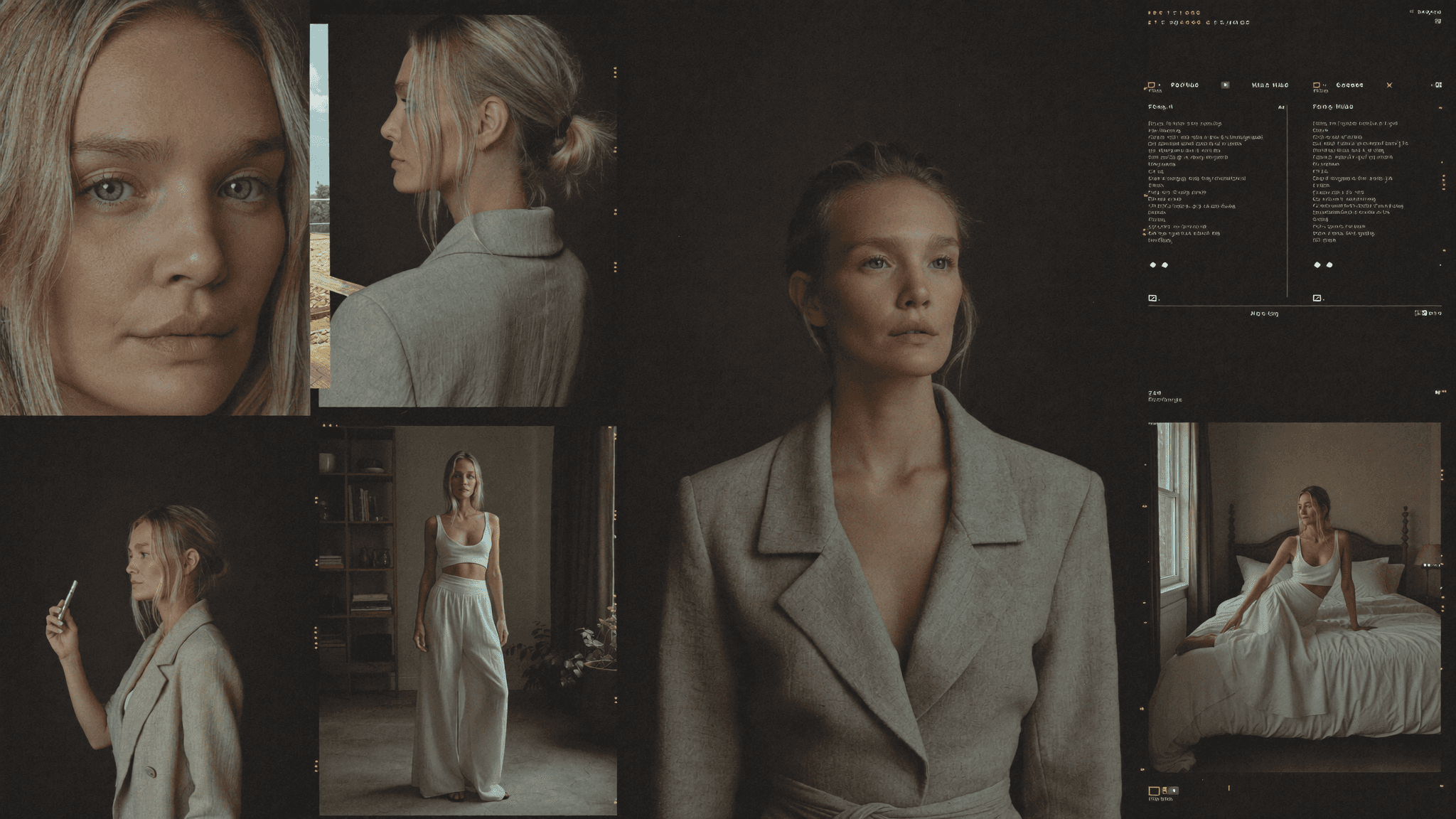
I built Mia with Higgsfield’s Soul ID Character feature using multiple photographs of myself. The source set gave the system different views of the same real identity rather than a single portrait to copy. Higgsfield then saved Mia as a reusable character that I can select inside the platform when creating a new image.
This is closer to working with a custom-trained identity than to prompting a generic model with a written physical description. I am not asking the system to reconstruct “a blonde woman with green-blue eyes” every time, and I am not adding a character sheet to each prompt. The identity has already been established inside the tool.
That distinction is important because text descriptions alone leave considerable room for reinterpretation. A prompt can specify the correct hair and eye color while producing a different facial structure in every frame. A trained identity gives the process a more stable visual anchor.
It does not, however, solve the entire continuity problem. A character can remain facially recognizable while the hair, apparent age, body proportions, styling, or emotional performance shift between shots. The saved identity is the base; cinematic continuity still has to be directed.
My prompts describe the scene—not Mia’s face from zero
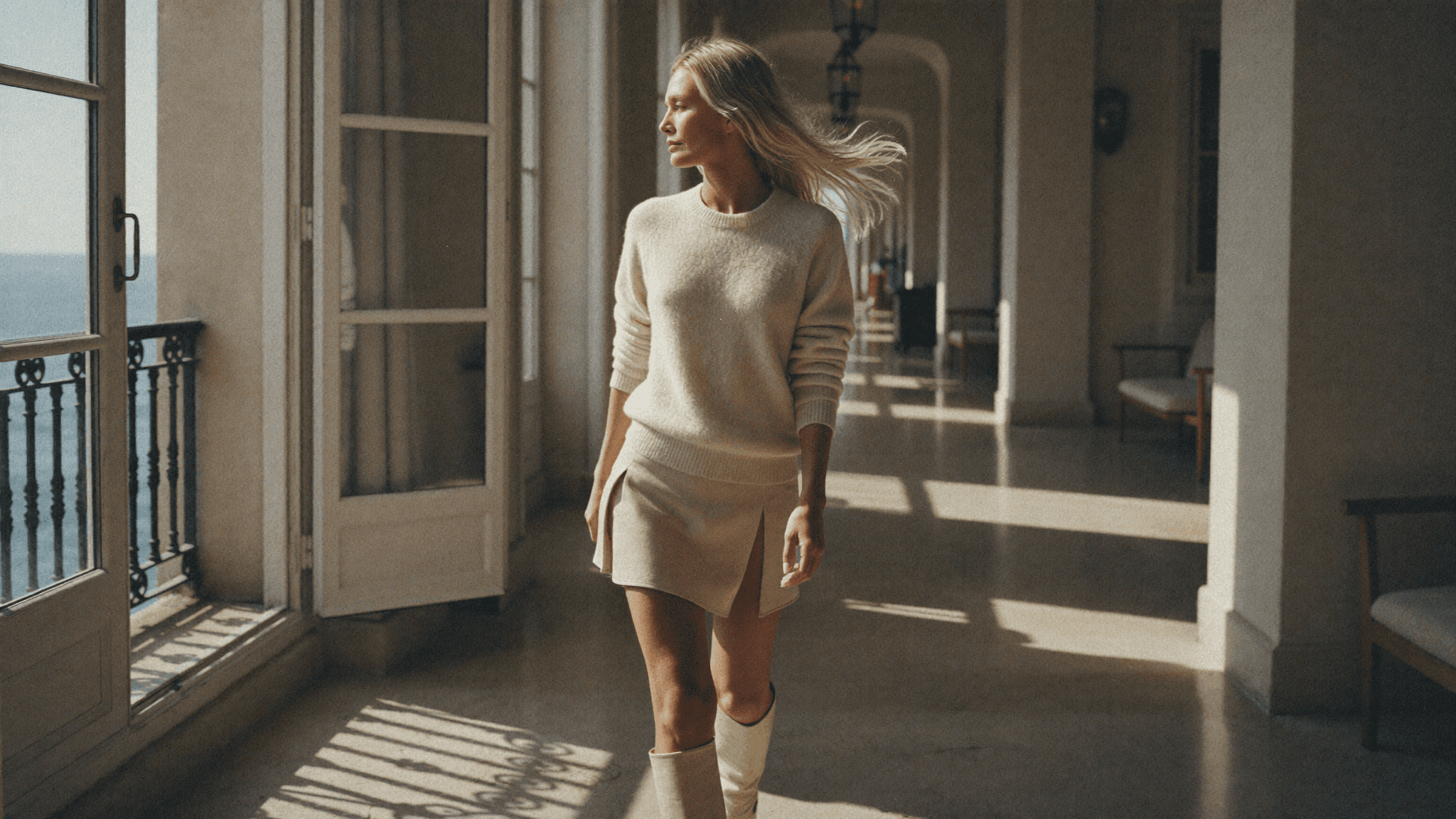
Once Mia is selected as the character, I use the prompt to direct what changes around that stable identity. I define the shot, pose, expression, wardrobe, environment, light, lens, and emotional beat.
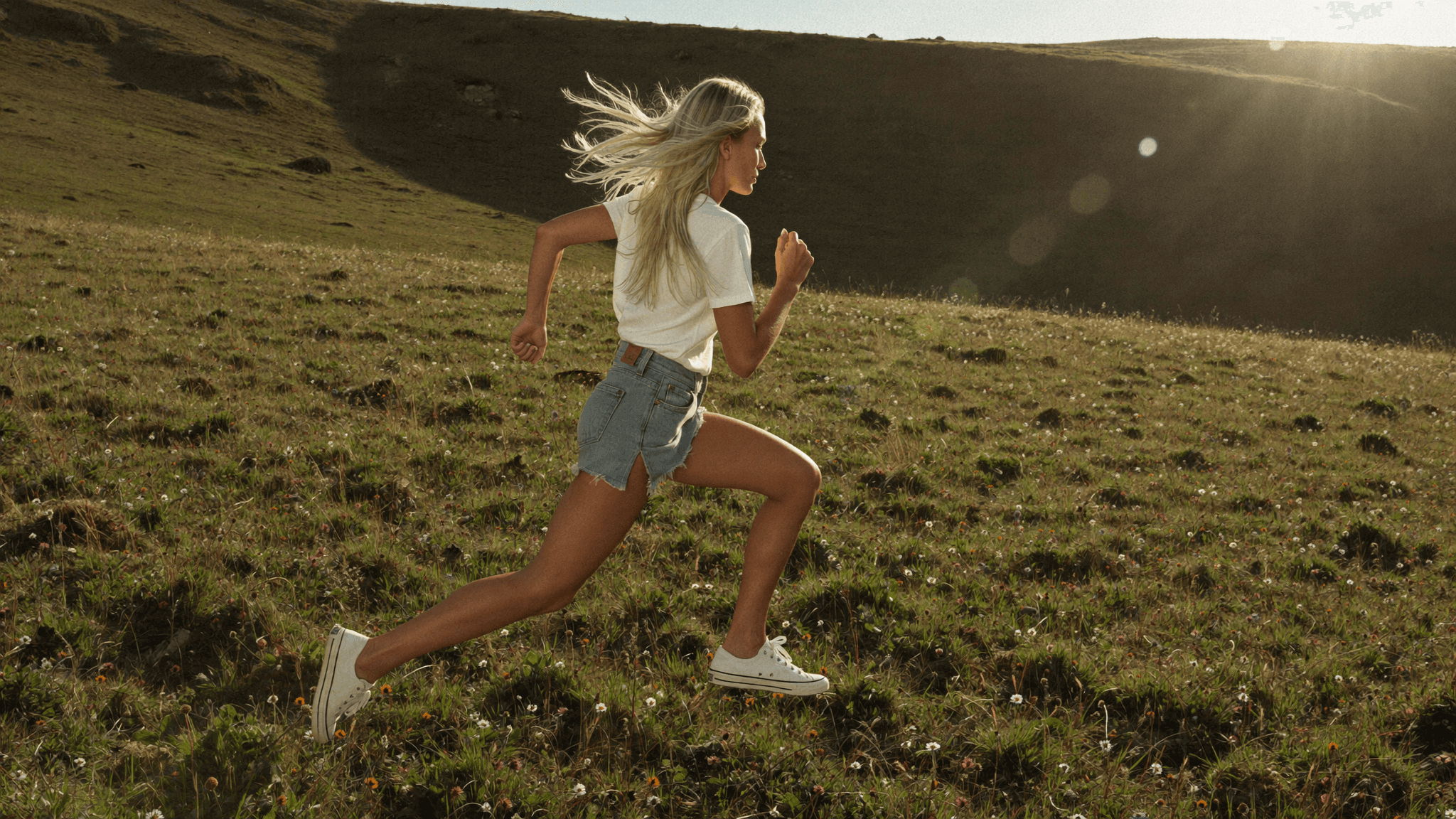
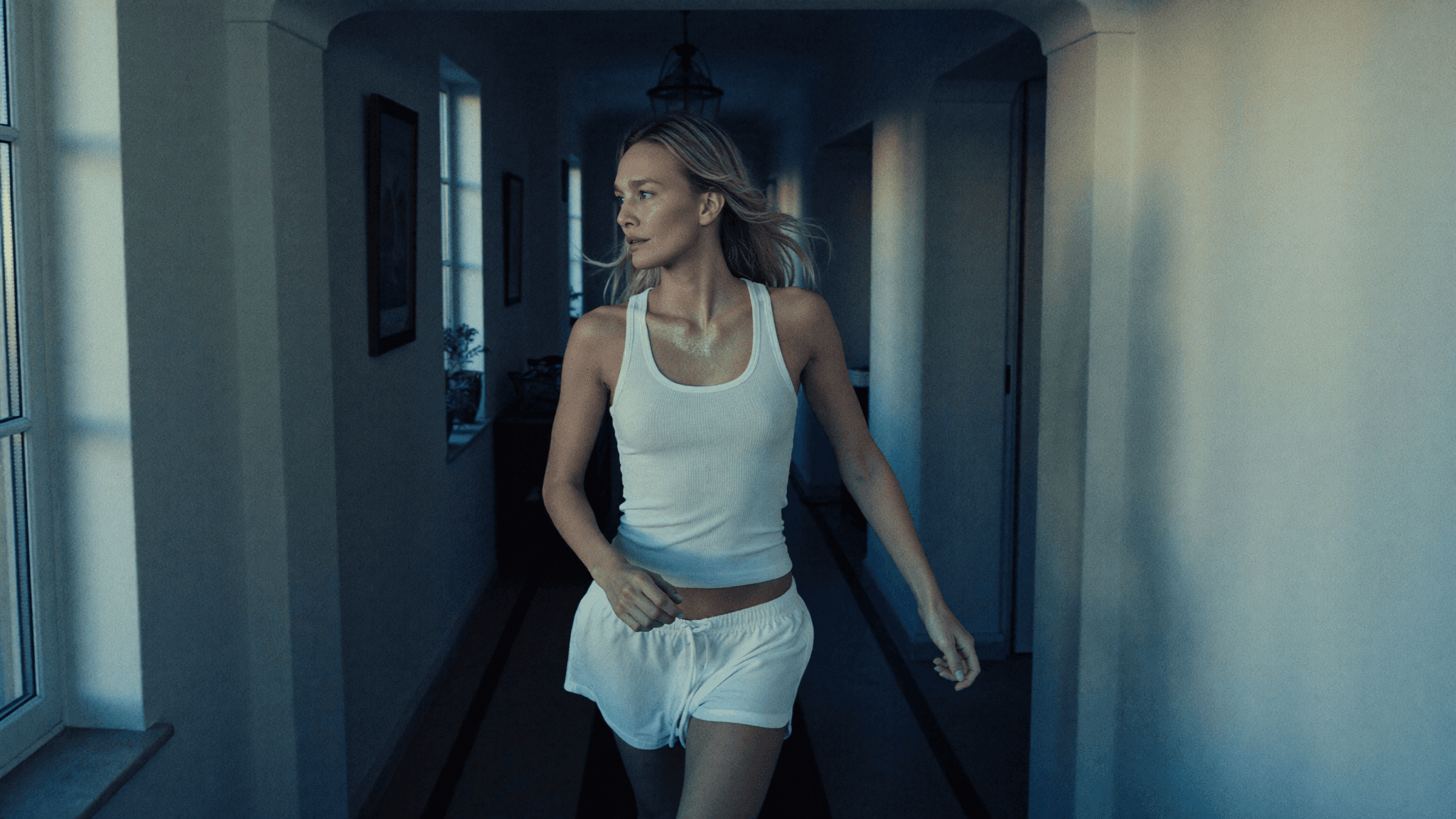
For example, the prompt may need to establish that she is running downhill toward screen right, that her torso follows the momentum of the slope, that the camera feels handheld, and that the late-afternoon sun creates an anamorphic flare. In a close-up, the priorities change: eyeline, facial angle, breathing, skin texture, depth of field, and the exact emotion carried by the shot become more important.
I may reinforce a visible trait when a specific generation drifts, but that is corrective direction rather than the mechanism that creates Mia’s identity. The recurring face comes from the trained character; the prompt creates the performance and visual world.
I separate identity from styling
A consistent character still needs variation. Hair, makeup, wardrobe, and mood can change without replacing the person underneath.
To manage that balance, I separate two layers:
Trained identity: the reusable Mia character created in Soul ID Character.
Scene variables: expression, wardrobe, hair movement, lighting, lens, environment, and emotional state.
This separation lets me change the scene without intentionally redesigning the character. If Mia is lying in grass at sunset, waking underwater, or moving through a Mediterranean hotel, the environment should affect her appearance—but she still needs to read as Mia.
The same principle applies to costume. Wardrobe helps establish the world and emotional tone of a scene, but it should not become the main mechanism of recognition. If a character is only identifiable because she always wears the same outfit, the underlying identity is not strong enough.
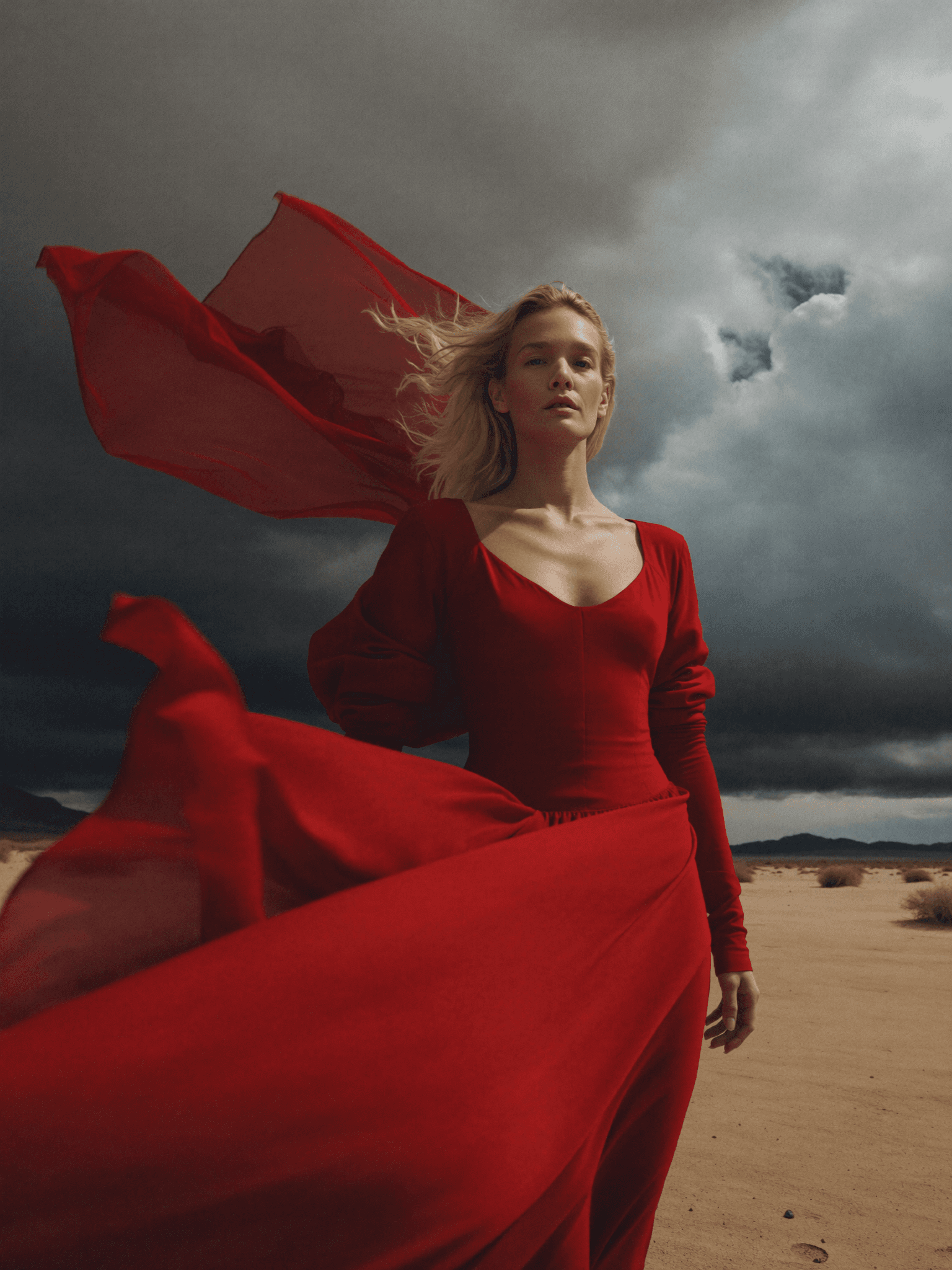
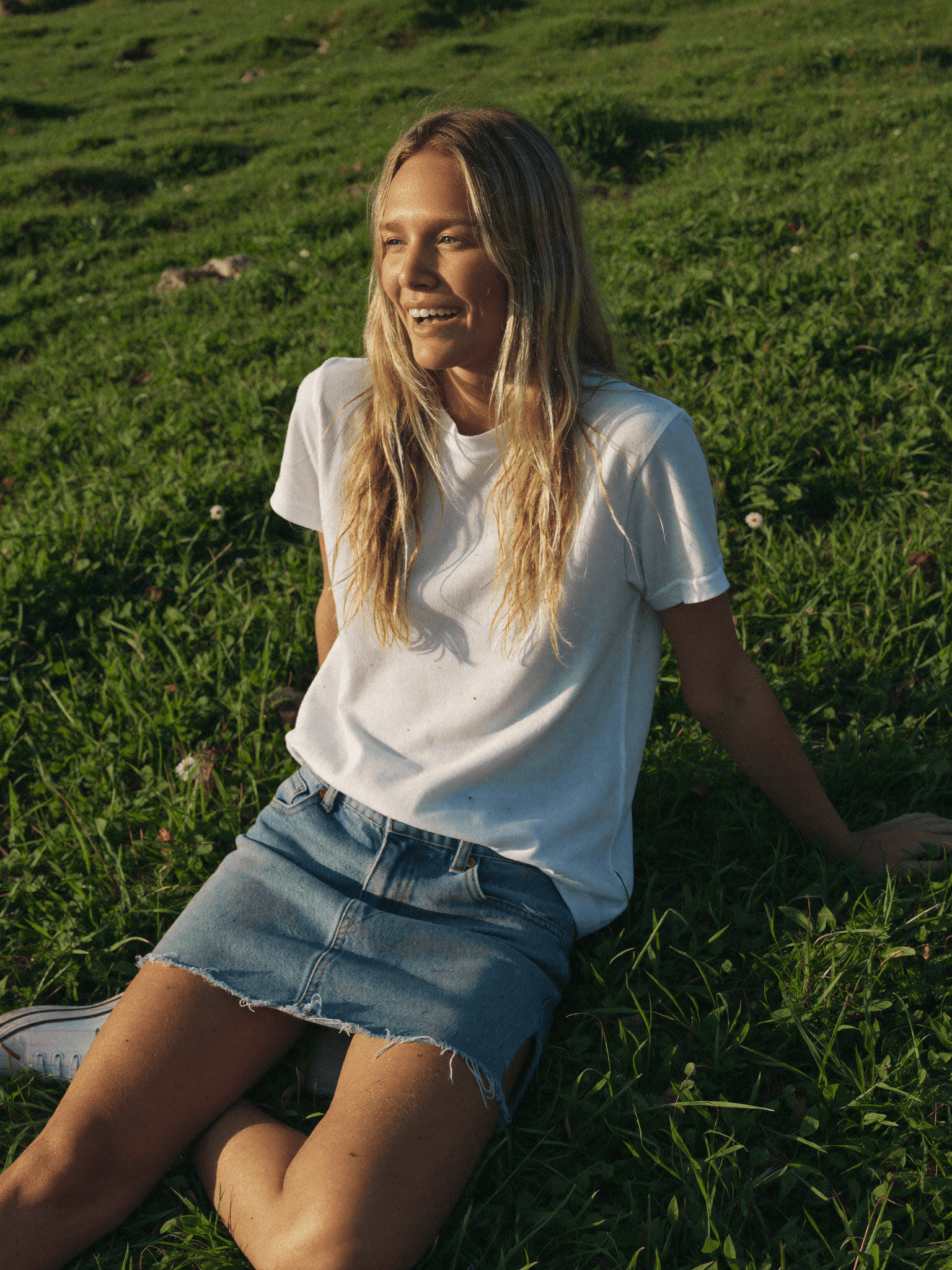
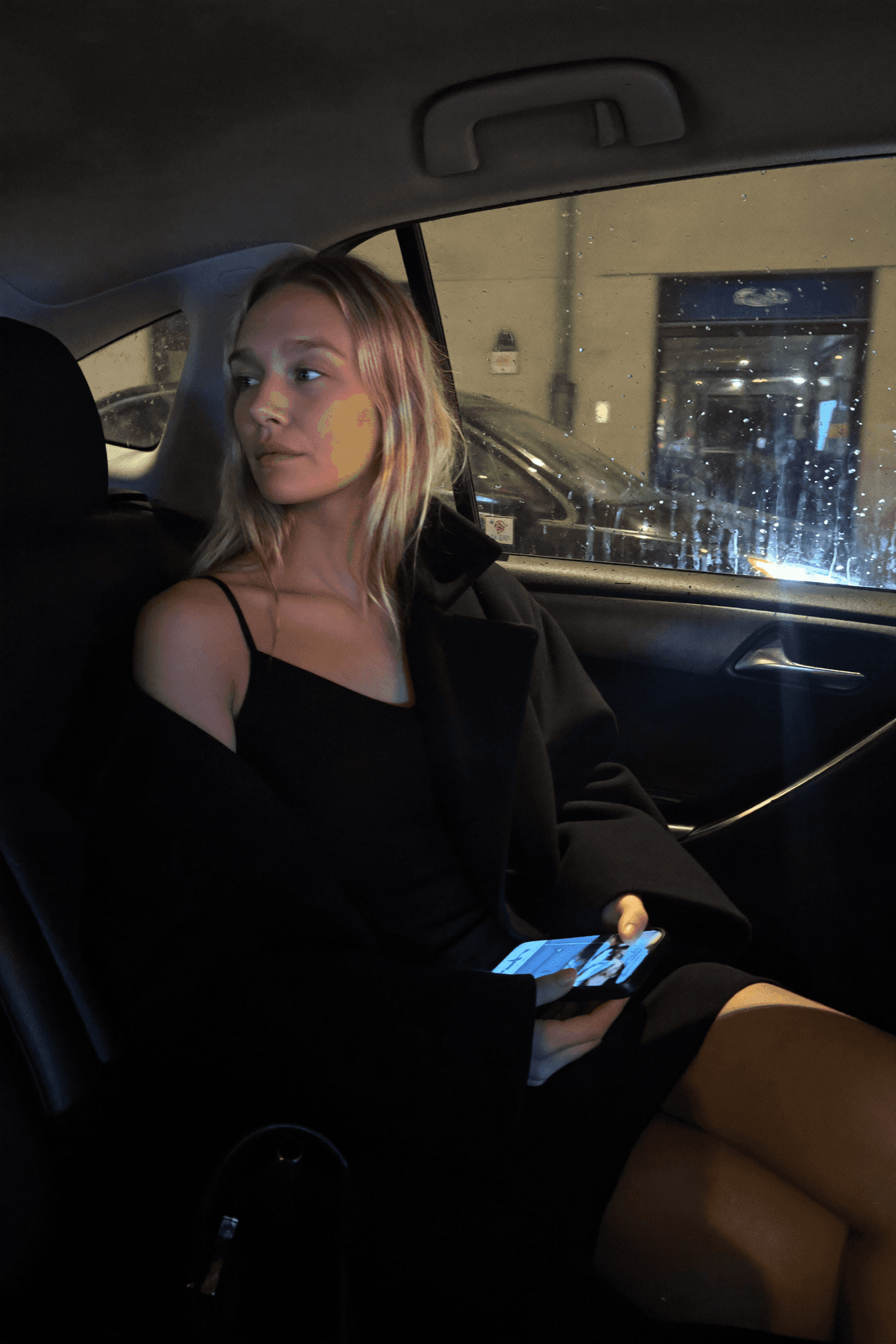
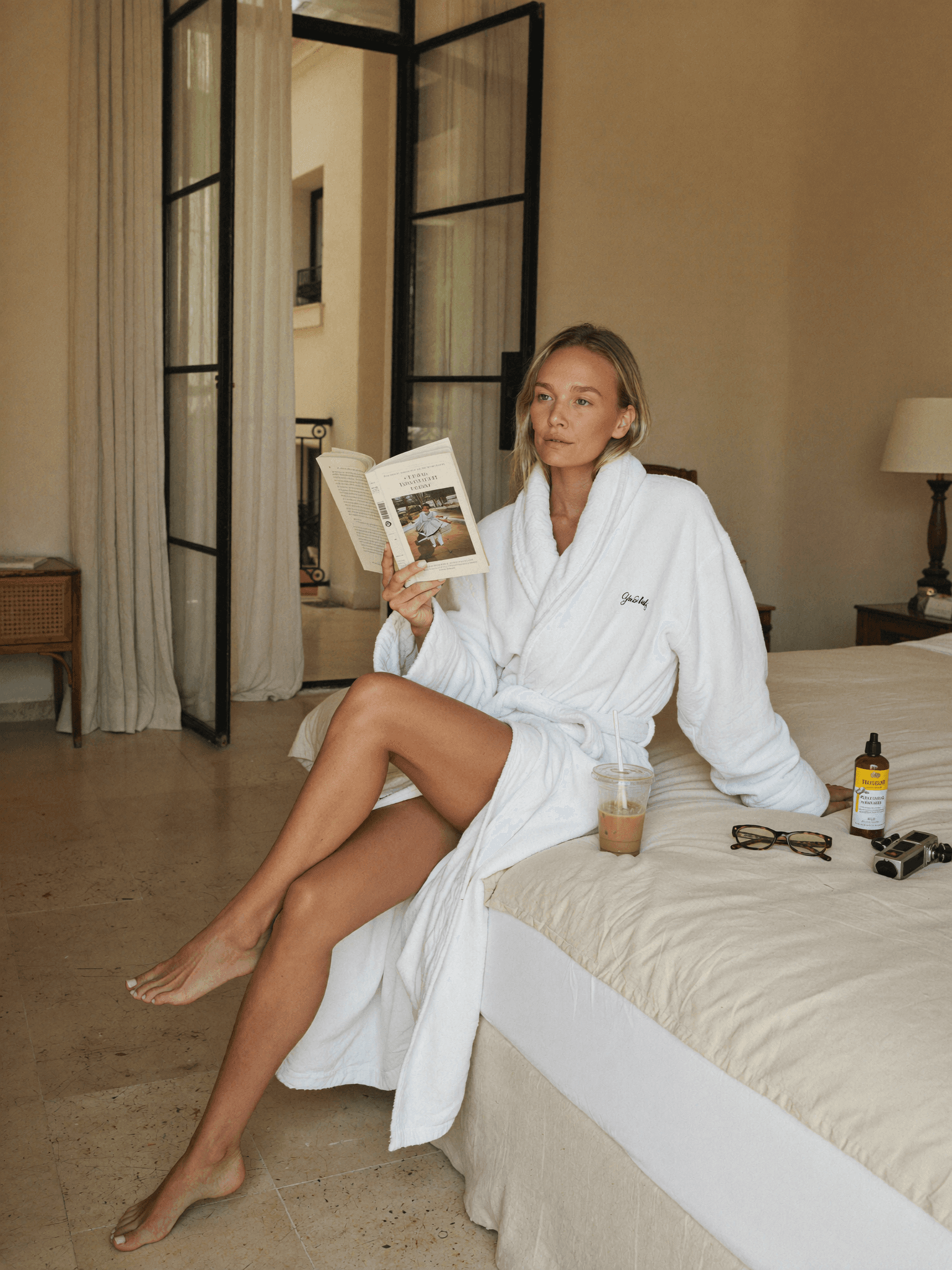
Consistency is a shot-design problem
Character continuity cannot be solved only by having a trained identity. Film language constantly changes the information available to the viewer.
An extreme close-up may show only the eyes, nose, and mouth. An over-the-shoulder shot may hide most of the face. A wide shot prioritizes silhouette, posture, and movement. A profile changes the apparent proportions of the nose, lips, and chin. Motion blur can remove the details that made a static portrait recognizable.
For that reason, I test the saved character through multiple cinematic views early in development:
frontal and three-quarter portraits;
left and right profiles;
extreme close-ups;
medium and full-body shots;
high and low emotional intensity;
soft daylight, direct sun, practical interiors, and night lighting;
still poses and movement.
This reveals where the trained identity is strongest, which angles need more careful direction, and what kinds of framing or lighting introduce visual drift.
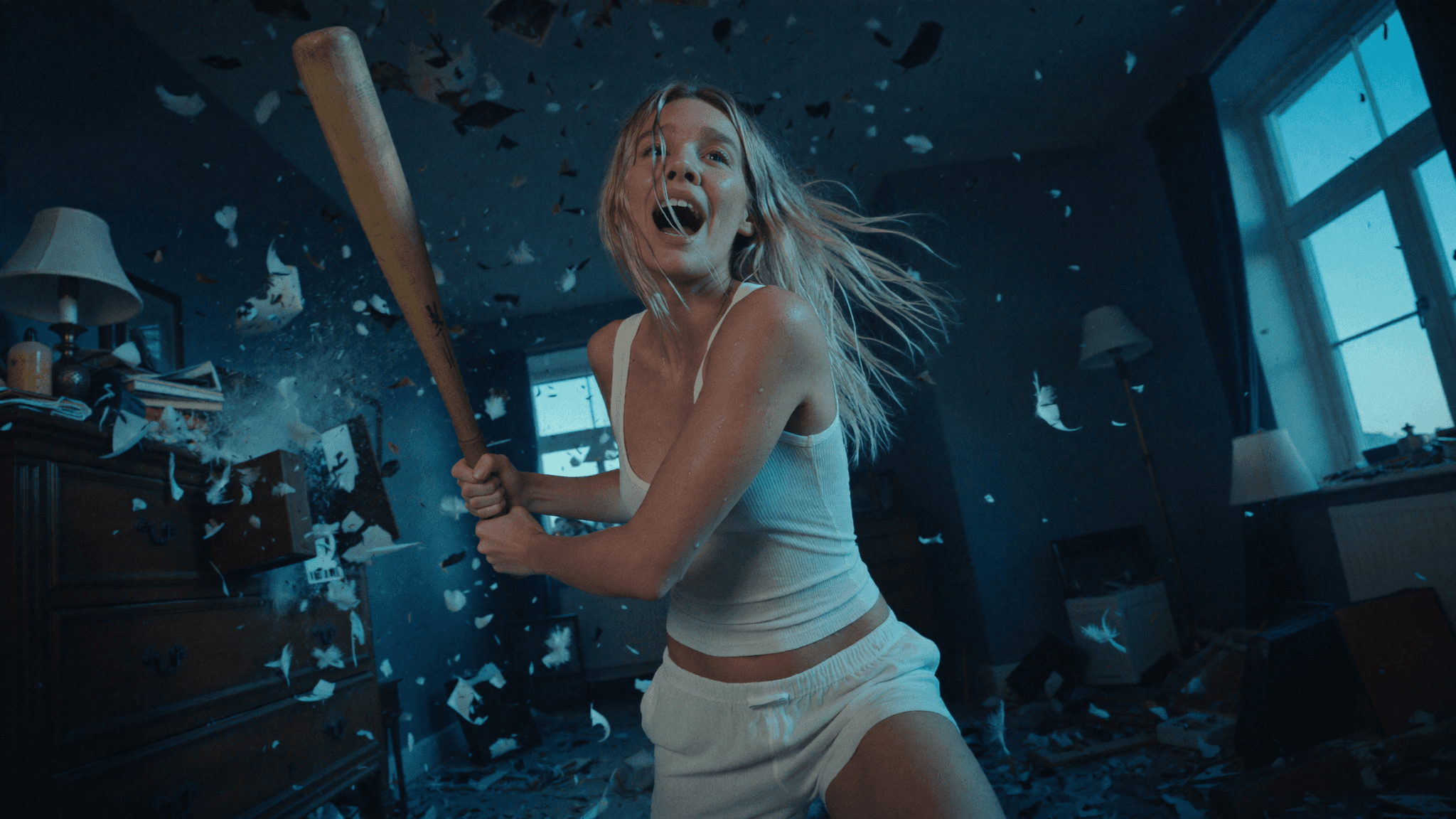
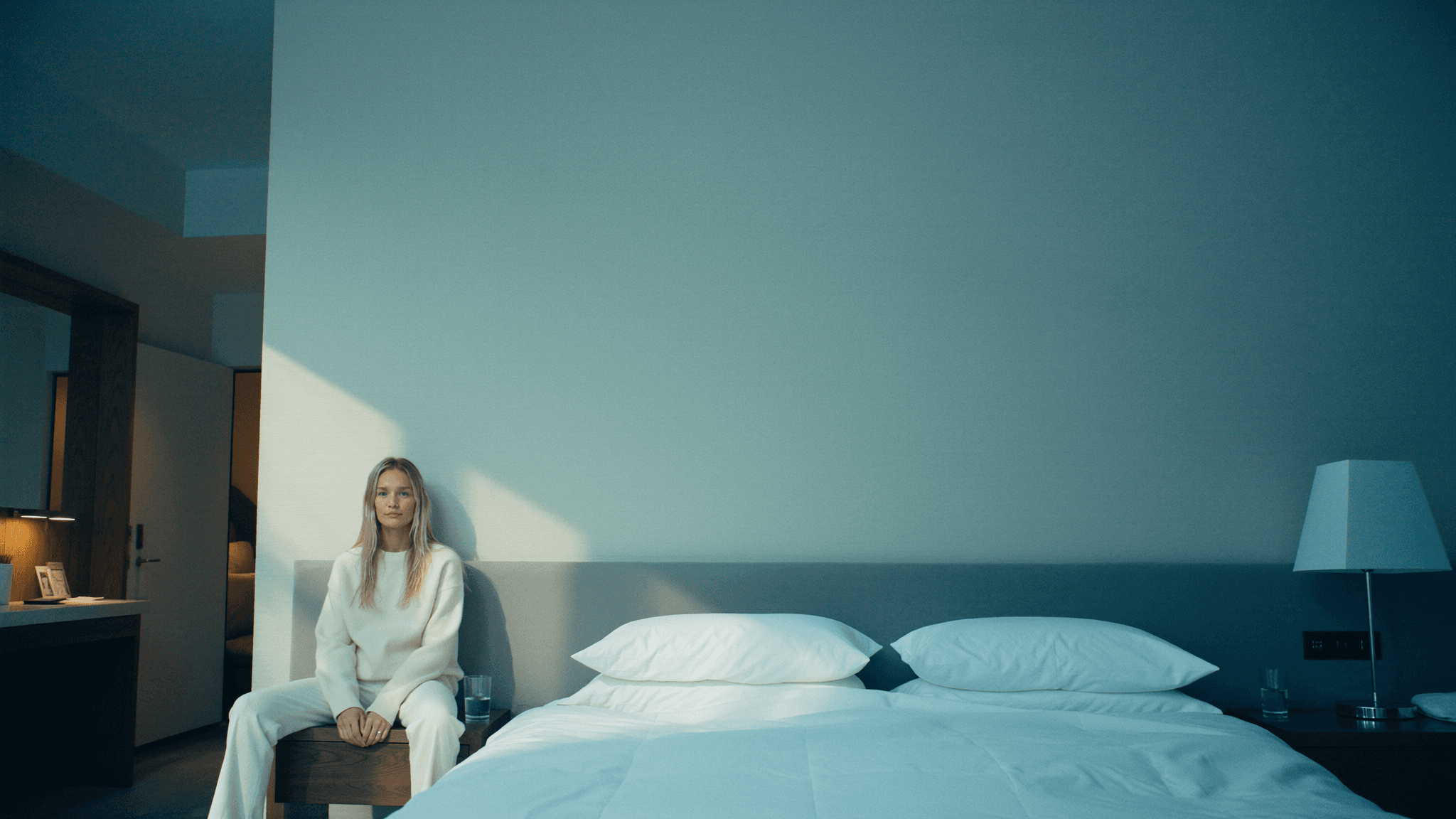
In A Dream of a Dream, Mia moves through repeated awakenings in a familiar bedroom. The sequence required intimacy, confusion, panic, and physical movement. Consistency was not only about matching her face from shot to shot. It also involved preserving emotional progression across images generated at different moments.
Selection is as important as generation
Generative tools produce possibilities. They do not make the final continuity decision.
My process involves rejecting images that may be beautiful on their own but do not belong to the character or sequence. A frame can have excellent composition and still fail because the trained identity has drifted, the expression does not connect to the previous shot, or the styling shifts the character into a different visual world.
I compare candidates at sequence level rather than evaluating each image in isolation. I ask:
Does she still look like Mia when the framing changes?
Does this expression continue the emotional beat from the previous shot?
Are the hair length, wardrobe, and physical details plausible across the cut?
Does the light feel motivated by the same space?
Is the camera language coherent?
Will the image animate without losing the traits that matter?
The strongest single image is not always the right frame for the film. Continuity often requires choosing the image that connects best with what comes before and after it.
Motion introduces a second layer of continuity
A character can be consistent in still images and fall apart when animated. Movement may alter facial structure, hair length, hands, clothing, or body proportions. Subtle expressions can become exaggerated. A natural turn can introduce a different profile halfway through the shot.
Before animation, I evaluate whether the keyframe gives the video model enough clear information. I consider the visibility of limbs, separation between body and background, direction of movement, perspective, and whether the desired action is physically compatible with the pose.
I also keep the action focused. Asking one shot to perform several complex movements increases the chance of visual drift. When possible, I break the sequence into purposeful shots: waking, looking, sitting up, walking, running, or falling. Each shot has its own emotional and physical objective.
Continuity is then rebuilt through editing. Rhythm, sound, match cuts, and repeated visual motifs can connect shots even when the generation process is not perfectly deterministic.
The goal is recognition, not duplication
Perfect duplication is not how people appear on camera. A living character looks different from every angle and in every emotional state. The real objective is controlled continuity: enough stable information for recognition, with enough variation for performance.
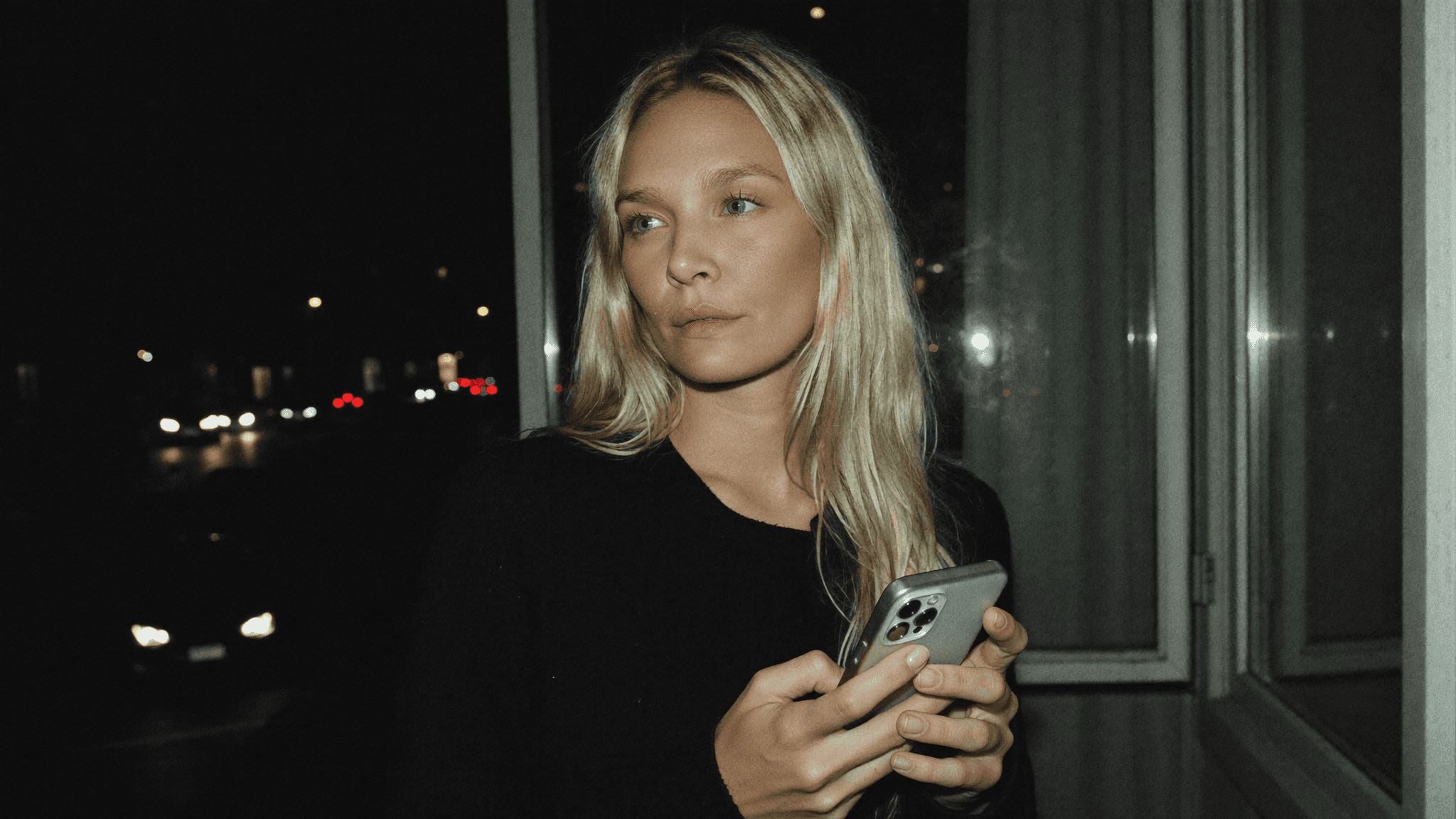
Mia’s development is an ongoing visual-direction process. Every new sequence tests her identity in a different way. A beauty portrait asks for precision in facial detail. A running shot asks for silhouette and body language. A false-awakening film asks for emotional continuity across repetition and distortion.
Soul ID gives me a reusable identity across generations, and generative AI makes it possible to explore variations quickly. But the screen character emerges through human decisions: what remains stable, what changes, how she performs, what belongs to the story, and what gets rejected.
That is the part of AI character development I find most compelling. Consistency is not merely a technical obstacle. It is how a collection of generated images begins to feel like one person moving through a world.
Explore the character and film
See Mia Wald’s character development and watch her in A Dream of a Dream.
Follow Mia Wald on social media for glimpses into her world, visual stories, and moments between films.
I collaborate with directors, studios, and production companies on AI character development, cinematic visual direction, and generative film sequences. Get in touch to discuss a project.