How I Turn My Dreams into Short Films with AI
A personal look at using AI filmmaking to recreate vivid dreams, share the experience of false awakenings, sleep paralysis, and lucid dreaming, and turn private worlds into cinema.
What if you could show someone a place you’ve only visited in your sleep? I’ve always been fascinated by the universes our minds create while we dream. I remember mine vividly: the places, what happened, and how it felt to be there. I write them down and immerse myself in those worlds again. Through AI, I found a way to turn them into short films—and share experiences, from false awakenings to moments of pure happiness, that once existed only in my mind.
How I Turn My Dreams into Short Films with AI
I’ve always been fascinated by dreams and the mind’s ability to create entire universes while we sleep. Places we can explore, people we can interact with, situations that feel completely real while we’re inside them.
I remember my dreams in detail. The locations, what happened, and how I felt while I was there. I write them down, and when I return to them, I can immerse myself in that universe again.
Some of those places are as clear in my mind as somewhere I’ve physically been. I remember the atmosphere, the light, the way the spaces connect. I also remember what it felt like to exist there: what I wanted, what frightened me, or what made me happy.
I’ve always found something cinematic in those experiences. Through AI filmmaking, I discovered a way to turn them into short films and share them with other people.
Turning dreams into cinematic worlds
When I make a film based on one of my dreams, I have a very specific reference in mind. I know the place. I know what happened there. The challenge is bringing that experience onto the screen.
AI gave me the tools to create locations I had visited in my sleep and develop them into cinematic sequences. I could work with framing, light, movement, and sound to give those worlds a form that other people could experience.
My memory guides those decisions. I can generate a beautiful image and immediately know it doesn’t belong to the dream. The space might look different, or the movement might change the feeling of the scene. I keep adjusting because I remember what it was like to be there.
There’s something deeply personal about seeing a world you know so well take shape outside your mind. For me, that possibility opened an entirely new creative path.
A Dream of a Dream: recreating false awakenings
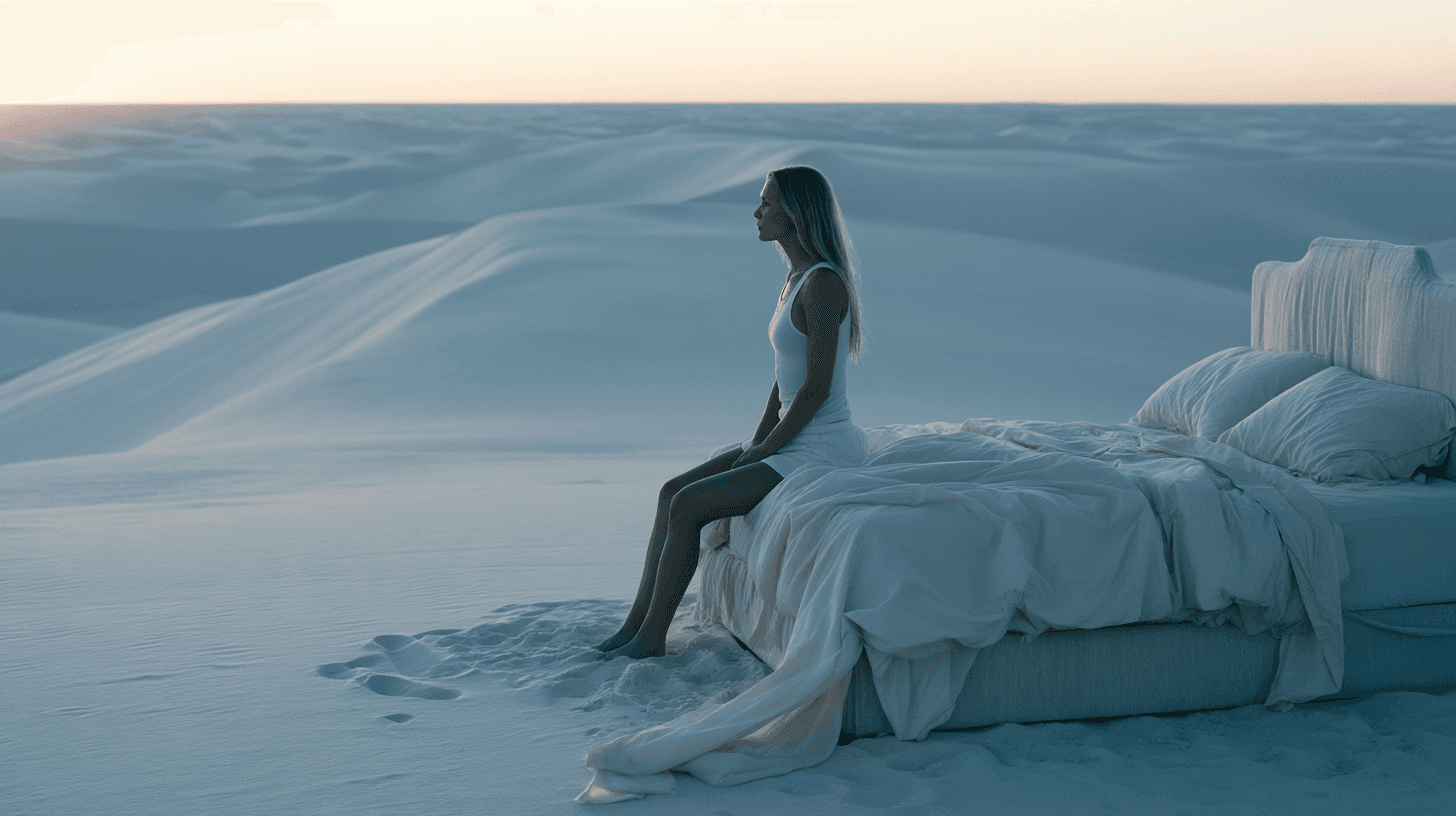
In my short film A Dream of a Dream, I explored false awakenings: the experience of dreaming that you’ve woken up, only to discover that you’re still asleep.
I know how convincing those awakenings can feel. You believe you’ve returned to your room and your life. You act with that certainty, until something makes you realize you haven’t actually woken up. Then it happens again.
I wanted to bring the viewer into that experience and let the desperation build through repetition. The room, the bed, and the act of waking up become part of a loop you’re trying to escape.
Making the film involved finding the rhythm of those awakenings: how long a moment should feel safe, when that feeling should break, and how camera movement, editing, and sound could carry the growing panic.
It gave me a way to communicate an experience that can be difficult to explain in conversation. Someone watching could follow the loop and feel the uncertainty as it unfolded.
Sharing what unusual sleep experiences feel like
My relationship with sleep also includes sleep paralysis and lucid dreams. These experiences are part of what has made me so curious about the worlds our minds create, and about how real they can feel from within.
Alongside the creative fascination, I want to share what these states feel like to me. Describing an experience after waking up is one thing; translating it into images gives me another way to express its atmosphere, intensity, and emotional impact.
I also hope these films can help create awareness. Someone might recognize an experience they’ve had but never knew how to name or explain. They might see a scene and think, “That has happened to me.”
My films come from my own perspective. Other people may experience these states differently. But sharing a personal account can open a conversation, give someone words to begin describing their own experience, or help them feel less alone.
That possibility matters to me as much as the visual work.

Recreating one of my happiest dreams
Another short film came from a very different experience.
It was late afternoon, and I was running down a grassy hill. I let myself fall into the grass. I could smell the damp earth, feel the ground beneath my hands, and feel the warmth of the sun. I was happy.
I remembered the place and the actions clearly, along with the physical sensation of being there. Making the film meant paying attention to all of them.
The sunlight mattered. The way I fell and moved in the grass mattered. So did the camera’s distance from the body and the time spent on a small gesture. Each choice brought the scene closer to the dream I remembered.
I wanted to share it because that happiness had stayed with me after waking up. Recreating the dream gave me a way to spend more time with it and invite someone else into that place.
Together, these films express very different parts of my relationship with dreaming: the desperation of trying to wake up and the joy of being somewhere you wish you could return to.

What AI filmmaking made possible for me
Working with AI has given me a practical way to develop these experiences into films. I can create the locations, build visual continuity, explore camera angles, and work on each sequence until it begins to communicate what I remember.
The process still asks me to make decisions at every stage. A convincing image might need another pass because the light feels wrong. A shot might work on its own but interrupt the rhythm of the sequence. I have to keep returning to the experience and deciding how to express it through cinema.
That is what draws me to this work: the connection between an intensely personal world and the choices that make it accessible to someone else.
I’ve always been able to remember my dreams, write them down, and revisit them. Now I can also turn them into something other people can watch. And perhaps, somewhere in those images, someone will recognize a part of their own nights.